Hello all! Hope all is well, school’s almost over! Despite that, the push for a better world is never over. And for that reason, I will be writing about strategies and initiatives that are going on in Europe right now to encourage renewable energy.
In 2024, the EU initiated an ambitious effort to speed up the adoption of renewable energy among the households of Europe. This was a part of its overall strategy to get the everyday citizens of the union to change the energy source for their homes. The EU’s campaign was not just meant to make people aware of the benefits of renewable energy, but to also explain why the side effects of what you do that affect other people and the system of using clean energy far outweigh those of using fossil fuels.
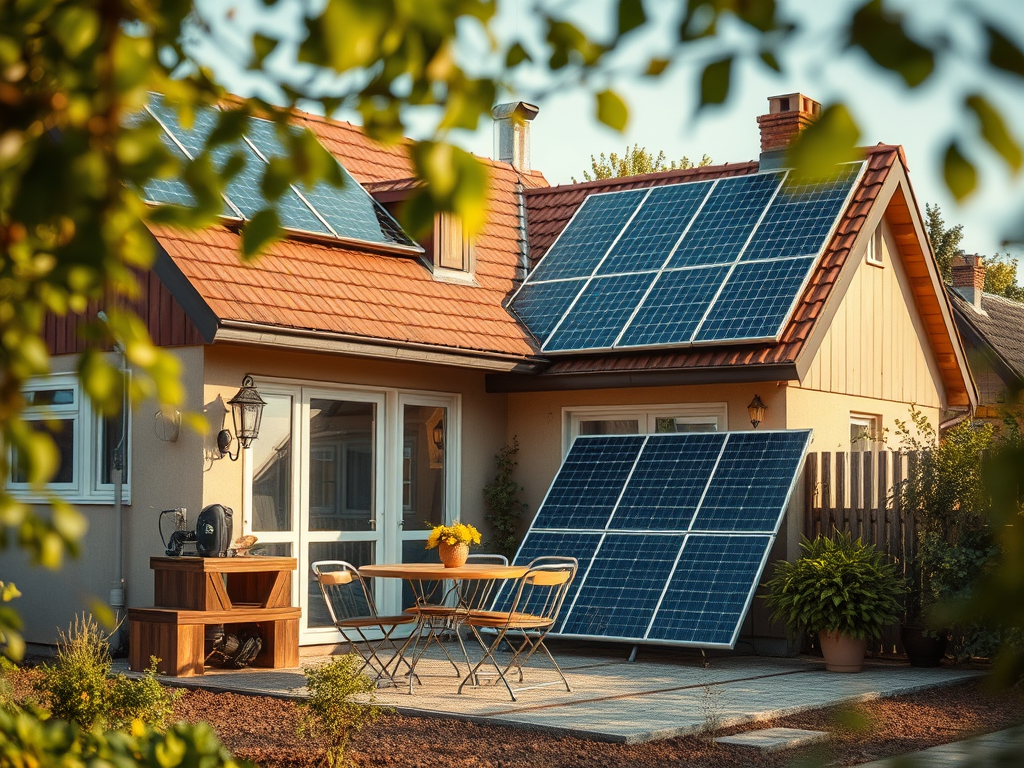
In its first year alone, the initiative significantly boosted household adoption of renewable energy and energy-efficiency upgrades, with a 25% increase in residents installing solar panels or energy-efficient appliances. The surge in adoption was driven by financial incentives combined with behaviorally informed messaging, both of which created a beguiling pathway toward a clean energy future for residents. For example, the city offered substantial rebates on the installation of solar panels as well as on energy-efficient appliances like heat pumps or LED lights. These incentives were calculated to cover a certain amount of the “first cost” of rooftop solar panels and to make apartment and house retrofits pay for themselves in a reasonable period of time.
Besides financial advantages, the campaign was based on the long-term cost savings and environmentally friendly nature of the “Solar Electric Powerhouse,” focusing on both its economic and ethical appeal. If you used it, the campaign said: “Your household would save a lot of money, you have no idea.” “Your cost savings would amount to $120,000 over the 20-year useful life of the equipment.” And: “The equipment would pay for itself in six years.” Of course, the campaign also had to make the broader case for the energy revolution. The Public Relations Society of America declared the energy security campaign the best use of public resources for a cause they had seen in years.
The EU’s renewable energy drive has succeeded largely for one basic reason: it has been smart and strategic in its use of the simple principles of behavioral economics, particularly the endowment effect and social norms. On the most fundamental level, we tend to value more highly the things we own. The renewable energy campaign has evidently understood that very well. It has reframed energy efficiency and the installation of renewable energy technologies as an investment in a long-term increase in the value of one’s home.
The choice to go eco-friendly increasingly seems mainstream—testimonials and case studies from early adopters have become powerful oratory tools in making that argument. They’ve helped bolster the notion that adopting renewables is the norm, not the exception to some aspirational rule. I feel like another that another tactic that has been behavioral in nature that is being used is the art of getting household members to actually do what they say they’re going to do. The campaign has gotten a substantial number of homes to sign a pledge, committing the family to installing and/or using energy-efficient devices or energy generated from renewable resources, such as solar panels. From this, I believe that campaigns are getting the biggest bang for their buck by making people want to actualize what they are going to do.
After individuals promised to switch, they carried out their promise (told you so). They moved to a new energy supplier. This means that the payback of following this strategy is quite good. We—my co-authors and I—think the same strategy could be used not just for getting people to switch to low-carbon energy but also for getting them to adopt other types of pro-environment behaviors. Campaigns that promise big reductions in carbon emissions and look to the path to a future powered exclusively by renewables can thus turn to tools such as those used by EnergieSprong that employ the appearance of certain behaviors, even if that appearance isn’t necessarily true in all places and at all times.
In the future, the EU is likely to enhance and broaden these behavior-influencing strategies and apply them to other parts of the energy transition, such as getting people to drive electric vehicles and to use less energy at home. If this grand experiment works, it could spur similar measures in other places, especially in countries that are also trying to move quickly to renewables.
At the world level, what Europe achieves with behavioral economics goes to show how small changes can go such a long way. Things as small as nudges in ones environment or the creation of new simple habits seem almost obvious in their positive effects down the line. What Europe is doing now is definantly a worthwhile practice, and should be explored on the global scale.
- International Energy Agency. (2023). Repowering the energy transition in Europe: The REPowerEU plan. Retrieved from https://www.iea.org/articles/repower-the-energy-transition
- McKinsey & Company. (2023). The EU Green Deal: A pathway to net-zero emissions by 2050. Retrieved from https://www.mckinsey.com/business-functions/sustainability/our-insights
 cognitivecents.com
Leave a comment