Hello all! You guessed it, another post about BE strategies and their impact on the world. This article will mainly be covering these strategies in the midst of vaccine hesitancy in 2024. Hope you enjoy!
New York’s “Vax Bucks” Program
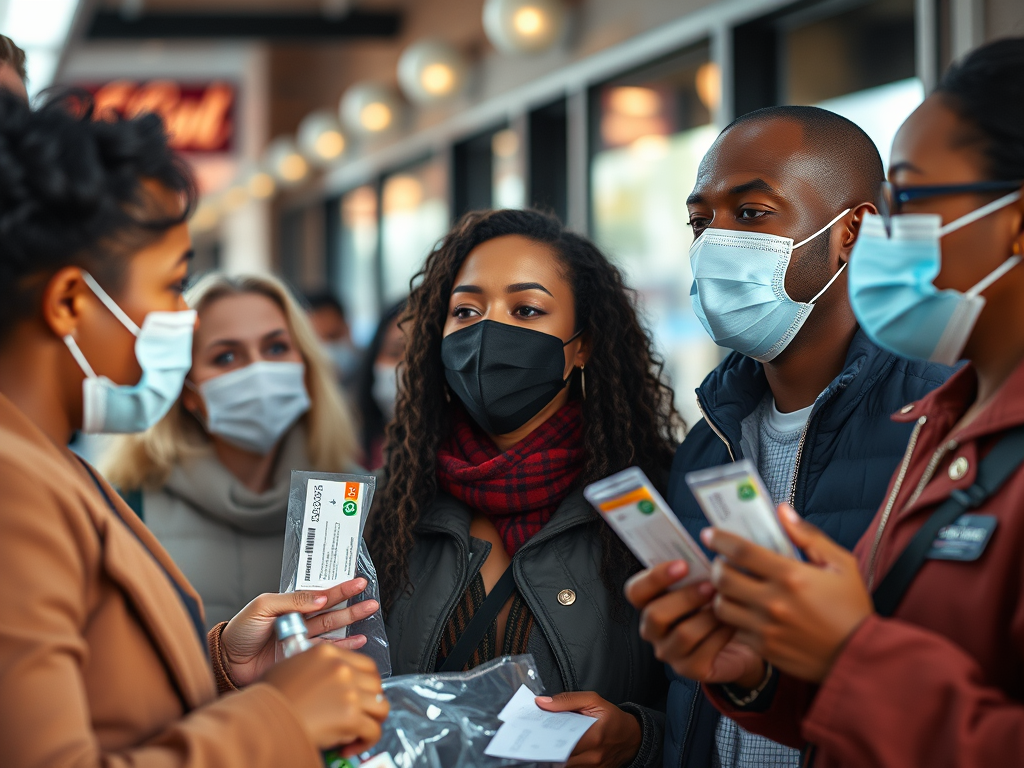
In early 2024, New York introduced “Vax Bucks” to get people to take the COVID booster shot. Basically, the program offers $50 vouchers redeemable at local businesses to individuals who get boosted. After a year and a half of funding by three hit incentive programs, the state has made the decision to continue using money as a conversation starter in the vaccination discussion.
Since its start in January 2024, the “Vax Bucks” program has induced a 35% increase in booster shot uptake among those eligible. This increase has been felt most strongly in the low-income neighborhoods where we all know that vaccine hesitancy and access have been huge issues, and it appears to be paying off.
Insights from Behavior:
The program’s success draws on the principle of providing immediate rewards and addresses what psychologists call present bias. People have a tendency to favor benefits that come sooner rather than later. When you give them a real, tangible reward for something they’re doing right now, that behavior is more likely to be repeated in the future.
Future Outlook:
Personally, I feel like this is a very promising plan. Not only is there an increase in vaccinations as a result of this, but people taking the vaccine who were previously hesitant have less of a bias against the vaccines. One obvious concern would be how affective this is on a macro-scale. As a New Yorker myself, I wasn’t really aware of this until I started digging for different strategies used in the country. With this in mind, the marketing of this strategy, though affective, may need some work if we want to use this as a large-scale strategy.
Health Nudge:
Additionally, Public health and tech sectors have collaborated on the development of mobile health apps that are now being used in the real world to deliver personalized “nudges”. These apps help people achieve their health goals, and they do so in a way that is largely driven by real-time data.
One app in specific is “HealthNudge,” an app that takes data from health-monitoring devices to send prompts and tips for better living. If a user’s step count is down, the app gives the user routes to walk. If a user is behind on shots, the app offers clinic suggestions and appointment times.
Influence:
The individuals who first embraced the “HealthNudge” application reported that it spurred them to engage in physical activities about a 25% more than they had been. It also influenced them to get vaccinations; the percentage of early adopters who got vaccinated increased by a modest but significant 15%, which is extremely interesting in light of the numbers that “Vax Bucks” was putting up.
Insights from behavior:
What’s interesting about this app is how personalized each nudge is. By learning more about the user, the app is able to create an idea on how to incentivize the user based on their environment and what they already know about the person. As a result, we see a more strong connection to the nudge and the user.
HealthNudge Inc. (2024). is “not just another fitness app” but is making huge steps in public health by using “real-time data and personalized nudges.” It wants to identify people who are at risk of serious health problems and then help them change their behavior in a way that will avoid those problems. And on top of all this, The services it offers are free to the public.
Conclusion
It’s safe to say that so far this year has been packed with more and more methods to incentivize people to make healthier choices. This is largely due to the recent promise of behavioral economics over past decades, which has led to public health interventions that now attempt to harness the power of incentives to improve the health of people in their populations. Programs like New York’s “Vax Bucks” show how using money as a motivator can effectively nudge individuals toward making a healthier choice. Meanwhile, in the UK, public health officials have been applying the power of suggestion in a somewhat related campaign they call social-norm feedback. However, it is important to realize that there is a fine line between a “good nudge” and a “bad nudge.” When creating these incentives, we need to be sure that we are not overmanipulating people into making choices they would strongly object to, it is not our place to control the free will of others.
Cited Sources:
- New York Department of Health. (2024). Vax Bucks Initiative Report. Retrieved from NYHealth.gov
- Jones, S. (2024). New York’s Vax Bucks Program: A Boost for Public Health and Local Economies. Health Policy Journal, 12(3), 45-56
- UK National Health Service (NHS). (2024). Social Norm Feedback to Reduce Antibiotic Overuse. Retrieved from NHS.uk
- Hallsworth, M., & Sanders, M. (2024). Reducing Antibiotic Overuse: The Power of Social Norms. The Lancet Public Health, 8(2), e123-e130
- HealthNudge Inc. (2024). Revolutionizing Public Health with Real-Time Data and Personalized Nudges. Retrieved from HealthNudge.com
- Patel, M. S., & Volpp, K. G. (2024). Leveraging Technology for Personalized Health Nudges. Journal of Medical Internet Research, 26(1), e45789
 cognitivecents.com
Leave a comment